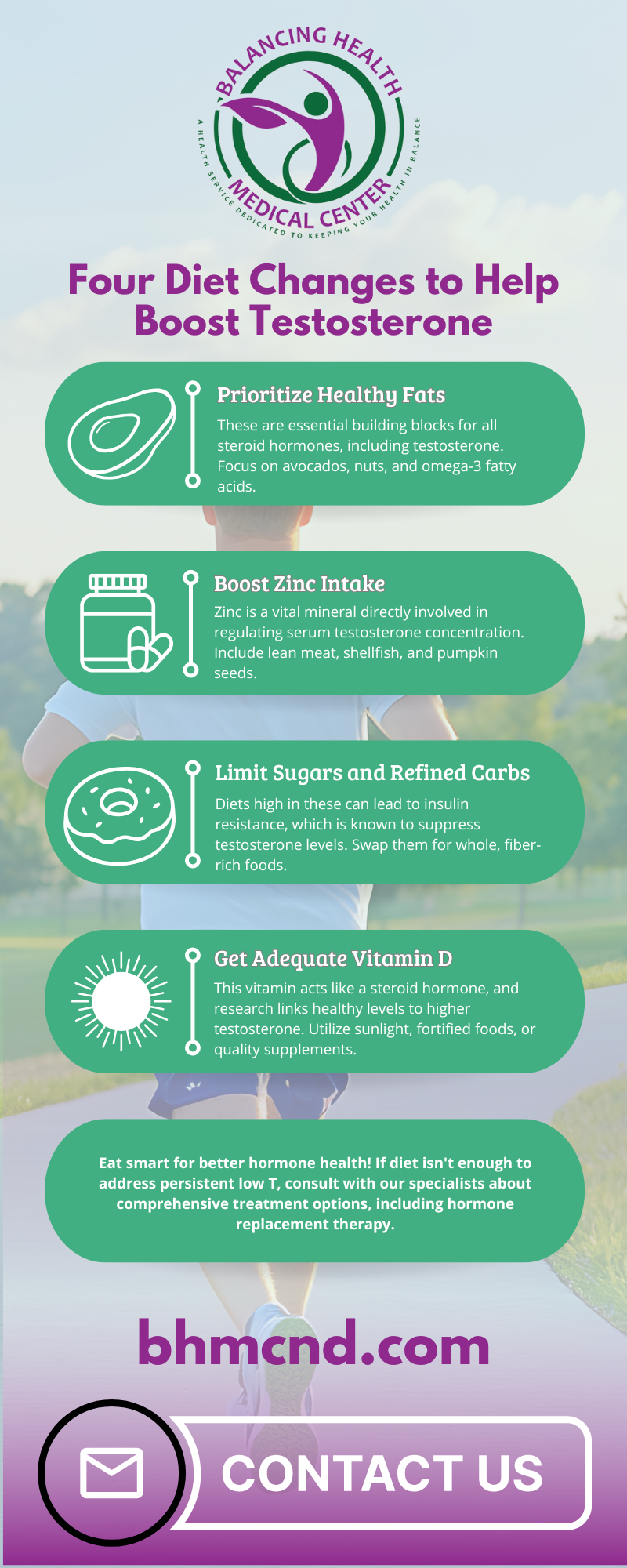

Testosterone is the critical hormone that defines male health, governing key functions from energy and muscle development to mood and libido. When your body’s production dips, it can lead to various issues. While age is a factor, modern dietary habits often negatively impact your ability to maintain healthy testosterone levels. The good news is that strategic nutrition is a powerful, accessible tool you can use today to start bolstering your body's natural hormone production. Learn more from Balancing Health Medical Center today.
Prioritize Healthy Fats

Don’t fear fat—embrace the right kind. Your body requires dietary cholesterol and healthy fats as essential raw materials for creating all steroid hormones, including testosterone. Incorporate sources rich in monounsaturated fats (like avocados, olive oil, and nuts) and Omega-3 fatty acids (found in fatty fish like salmon) to ensure your hormonal pathways are well-supported.
Boost Your Zinc Intake

Zinc is a crucial trace mineral that plays a direct role in regulating serum testosterone concentration. Research shows that even a mild deficiency can negatively impact hormone output. Increase your consumption of natural sources like lean red meat, shellfish (especially oysters), beans, and pumpkin seeds to help stabilize your levels.
Manage Sugar and Refined Carbs

A diet high in processed sugars and refined carbohydrates can trigger chronic inflammation and insulin spikes, which are known to suppress natural testosterone levels. By swapping refined grains and sugary beverages for whole foods, high-fiber vegetables, and complex carbohydrates, you can better manage blood sugar and create a more favorable environment for hormone production.
Get Adequate Vitamin D

Vitamin D actually functions as a steroid hormone in the body. Studies consistently link sufficient levels of Vitamin D to improved testosterone levels. Since sun exposure can be inconsistent, ensure you consume fortified foods or discuss appropriate supplementation with your doctor.
Optimizing your diet is a fundamental first step in addressing low testosterone levels. Consult with a men’s health specialist to explore comprehensive treatment options, including potential solutions like personalized hormone replacement therapy, to help you regain your vitality and health. Contact us!